
LNG 气化撬LNG vaporizing skid
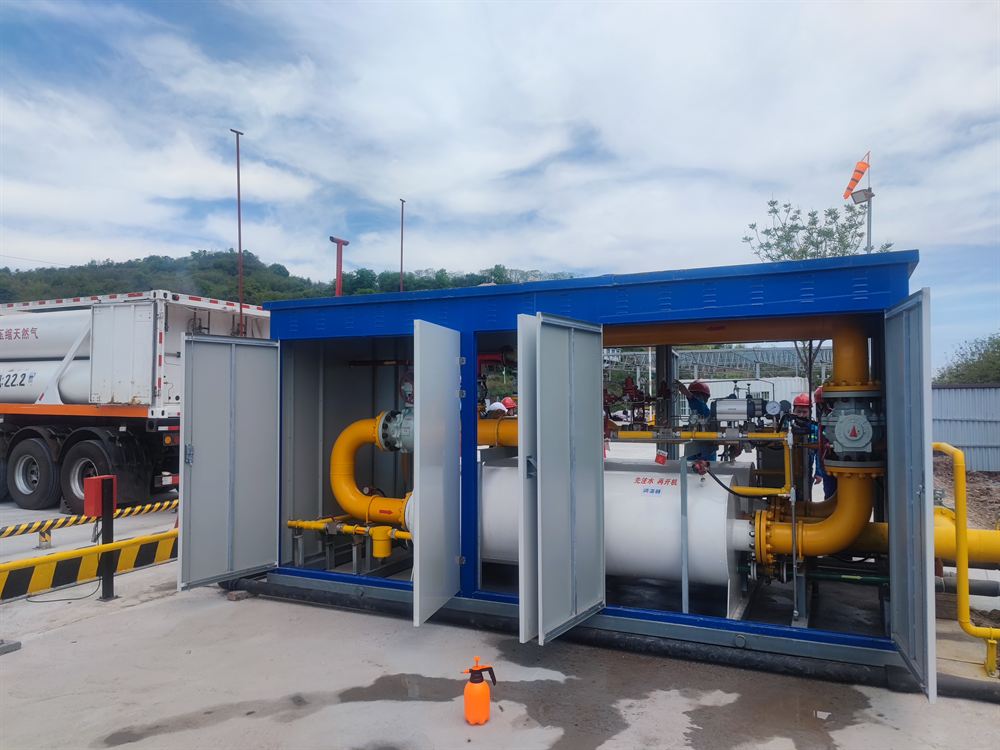
500 Nm³/h 级 LNG 气化撬,空温式气化器打底、水浴式补热,调压计量与安全放散随机集成。500 Nm³/h class skid: ambient vaporizer with water-bath trim, regulation and metering integrated.
产品概述Product overview
LNG 是 −162℃ 的深冷液体,气化撬要做的第一件事就是把它加热到常温。空温式气化器靠空气做热源,不耗电、免维护,但气化量随环境温度波动大——夏季可能到额定值的 120%,冬季 −20℃ 时只剩 60% 左右。所以北方项目常把空温式与一小台水浴式(电加热或热水)串起来,冬季由水浴式补足热量,这就是“1 级换热、2 级减压”配置的由来。Ambient vaporizers lose capacity in winter (−20 °C gives about 60% of rating), so a water-bath trim heater is added in series for northern sites.
撬上流程:槽车来液经卸车增压进入气化器,出气经两级调压降到 10–15 kPa 或用户指定压力,再经计量、加臭(民用需要时)送出。整套设备在厂内完成管路焊接、探伤、强度与气密试验、涂装与仪表联调,现场只需基础找平与进出口对接。Liquid is boosted, vaporised, regulated in two stages to 10–15 kPa, then metered and odourised where required.
结构组成What is on the skid
核心优势Why this design
- 空温为主、水浴补热:常年运行费用低,冬季气化量守得住。Ambient base with trim heat: low running cost, winter capacity kept.
- 撬装出厂:土建量小,现场接入周期以天计。Shop-built: days to connect.
- 出口压力稳定:两级减压,用气波动时管网压力不飘。Stable outlet across demand swings.
- 可扩展:预留储罐、卸车增压器、BOG 回收接口。Interfaces for tank, booster and BOG recovery.
技术参数Technical data
| 型号Model | HBTL-LNG/500 Nm³/hHBTL-LNG/500 |
|---|---|
| 介质Medium | 液化天然气(LNG)LNG |
| 额定流量Flow | 500 Nm³/h500 Nm³/h |
| 设计压力 / 进口Design / inlet | 1.6 MPa / 0.8 MPa1.6 / 0.8 MPa |
| 出口压力Outlet | 10–15 kPa10–15 kPa |
| 换热 / 减压Exchange / stages | 1 级换热 · 2 级减压1 exchange · 2 stages |
| 配套功率Power | 9 kW9 kW |
| 运行环境Ambient | −20 ℃ ~ +50 ℃−20 to +50 °C |
表中为该系列典型配置。项目流量、介质与进出口压力不同时按工况单独设计,参数以合同技术文件为准。Typical configuration; units are engineered per duty and the contract data sheet governs.
适用工况Typical duties
与传统方案的对比Against the conventional approach
| 比较维度Item | 纯空温式Ambient only | 泰燃空温+水浴Ambient + water bath |
|---|---|---|
| 冬季气化量Winter capacity | 约额定的 60%≈60% of rating | 补热后接近额定Near rating |
| 运行能耗Energy | 零耗电Zero | 仅冬季补热耗电Trim heat only |
| 占地Footprint | 翅片区占地面大Large fin area | 水浴式紧凑,整体占地小Compact trim unit |
同类设备Related equipment
把你的工况发过来,我们出选型表Send your duty, we return a selection sheet
需要提供:介质、最大/最小流量、进口压力、出口压力、现场热源(电/热水/蒸汽)、安装场地条件。We need medium, min/max flow, inlet and outlet pressure, available heat source and site conditions.